
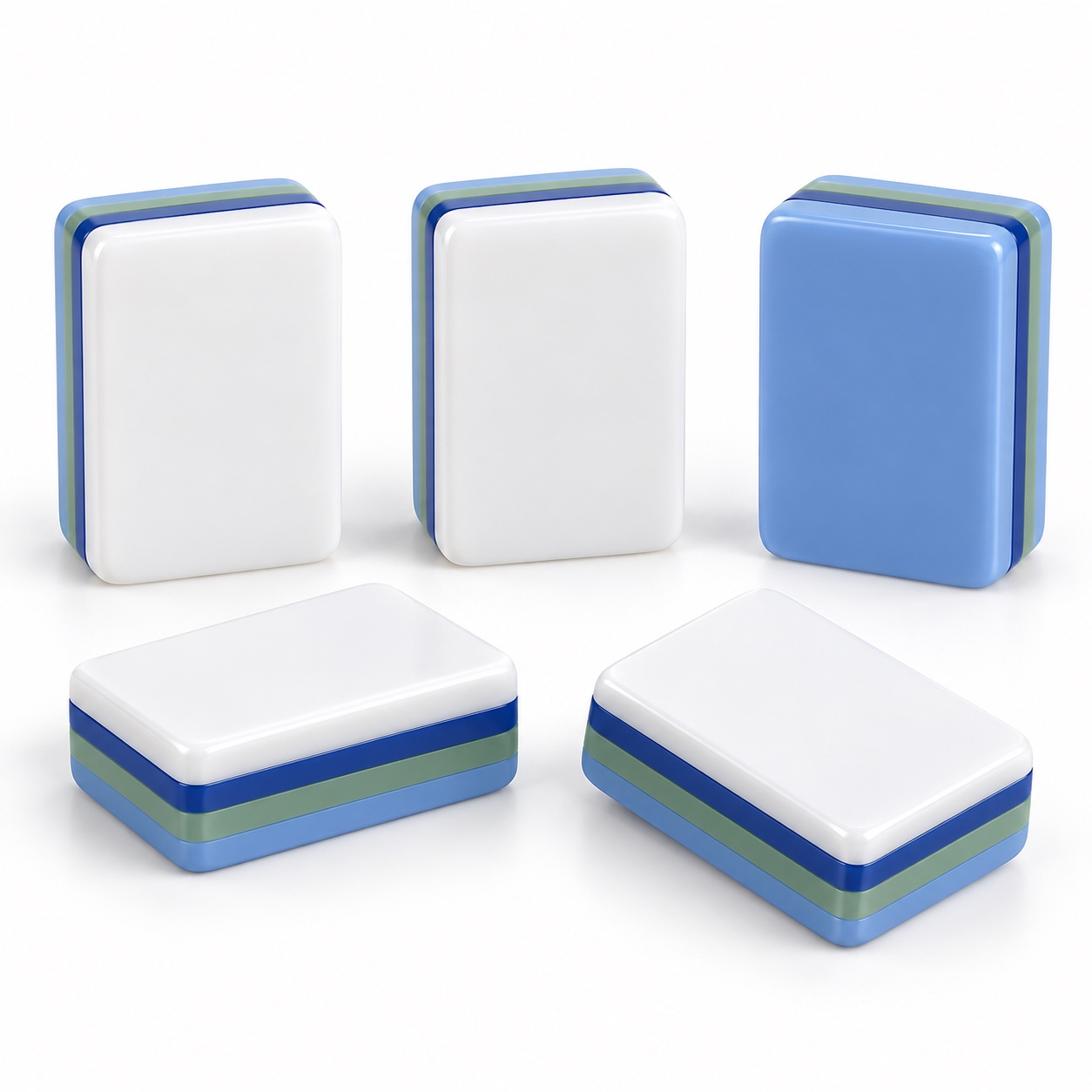
Quick answer: which is better, acrylic or melamine?
Acrylic American Mahjong tiles are usually the better choice for premium gifts, boutique retail, and private label collections because they polish well, come in many colors and layered effects, and support a more elevated visual finish.
Melamine American Mahjong tiles are usually better for cost-controlled wholesale, club, teaching, or high-volume programs where durability, stable pricing, and practical daily use are more important than luxury positioning.
Key takeaways
- Acrylic American Mahjong tiles are usually the better choice for premium gifts, boutique retail, and private label collections because they polish well, come in many colors and layered effects, and support a more elevated visual finish.
- Melamine American Mahjong tiles are usually better for cost-controlled wholesale, club, teaching, or high-volume programs where durability, stable pricing, and practical daily use are more important than luxury positioning.
- For wholesale buyers, acrylic vs melamine is not only a production question.
On this page
- 1. The Material Choice Is a Positioning Decision
- 2. Acrylic Works Best for Premium Perceived Value
- 3. Melamine Works Best for Practical Volume
- 4. QC Checklist for Both Materials
- 5. Recommendation by Buyer Type
- Material Choice Also Affects Packaging
- Buyer FAQ
- Buyer checklist
- Production notes
- Related buyer guides
1. The Material Choice Is a Positioning Decision
For wholesale buyers, acrylic vs melamine is not only a production question. It affects target retail price, perceived value, carton weight, packaging expectations, photo quality, reorder consistency, and customer satisfaction. A premium gift shop and a community club may both need American Mahjong sets, but they usually need different material strategies.
Before comparing unit price, decide whether the product should feel like a luxury lifestyle gift, a reliable club set, a teaching set, a boutique private label SKU, or a promotional item. The best material is the one that fits the buyer, not simply the one that looks best in a sample photo.
| Factor | Acrylic Tiles | Melamine Tiles |
|---|---|---|
| Best use case | Premium retail, gifts, private label, visual collections | Clubs, teaching, value wholesale, practical repeat orders |
| Look and feel | Glossy, polished, heavier, more giftable | Practical, stable, durable, familiar for daily play |
| Customization | Strong for color, transparency effects, backs, and premium artwork | Good for standard designs and controlled-volume programs |
| Buyer risk | Higher expectations for finish, packaging, and inspection | Needs clear color and print standards to avoid looking generic |
2. Acrylic Works Best for Premium Perceived Value
Acrylic can support a polished look that photographs well for ecommerce, gifting, and lifestyle merchandising. Buyers often choose acrylic when they want pastel palettes, botanical patterns, translucent effects, heavier tile feel, or a modern luxury presentation.
The tradeoff is that premium appearance requires tighter QC. Buyers should check surface polish, tile edges, color consistency, print alignment, scratch risk, and packaging protection. Acrylic sets also need retail packaging that matches the material value, otherwise the set may feel under-presented.
3. Melamine Works Best for Practical Volume
Melamine is a practical choice for buyers who prioritize stable cost, durable daily use, and straightforward production. It can be a strong fit for club programs, teacher kits, value wholesale assortments, and classic American Mahjong sets that need to perform reliably without a premium price point.
The main risk with melamine is positioning. If a buyer tries to sell it as a luxury product without strong design, packaging, or story, it may feel too basic. For value or club buyers, that is not a problem. For boutique buyers, it can limit perceived value.
4. QC Checklist for Both Materials
Check polish, edge feel, scratches, dents, color marks, and visible defects under retail lighting.
Confirm numerals, suits, jokers, and letters are sharp, aligned, and readable for American players.
Verify American-style tile count, jokers, blanks, accessories, racks, and pushers before packing.
Use trays, bags, foam, carton labels, and drop-safe export packing appropriate to the material weight.
5. Recommendation by Buyer Type
Choose acrylic if your target buyer is a boutique, gift shop, lifestyle retailer, wedding buyer, private label brand, or premium ecommerce audience. Choose melamine if your target buyer is a club, school, teacher, distributor, or value-focused wholesale channel.
For mixed programs, a practical approach is to launch one premium acrylic hero SKU and one stable melamine volume SKU. This gives the sales team two price points without confusing the brand.
Material Choice Also Affects Packaging
Material influences tile feel, thickness, carton planning, case fit, gift box layout, and shipping estimates. Buyers should avoid finalizing packaging before tile count, material, accessories, and storage requirements are locked.
A beautiful tile can still create problems if the case cannot protect it, if the insert does not fit the tile depth, or if the full American-style configuration becomes too heavy for the selected packaging format.
Buyer FAQ
Are acrylic or melamine Mahjong tiles heavier?
It depends on tile size and thickness more than the material name. Compare the actual weight of sample tiles rather than relying on the material alone.
Which is better for beginners and clubs?
Melamine is often chosen for practical, frequent play at a controlled cost. Acrylic suits players who want more color and a premium look. Readable markings matter more than material for beginners.
Is acrylic better than melamine for American Mahjong sets?
Acrylic is better for premium visual value and gifting. Melamine is better for practical cost-controlled use. The better material depends on the buyer channel and target retail price.
Which material is better for private label Mahjong sets?
Acrylic is often stronger for private label programs because it supports a more premium look, but melamine can work if the packaging, artwork, and price point are planned carefully.
What should I ask the factory before choosing material?
Ask for sample photos, material weight, tile dimensions, print method, color tolerance, MOQ, packaging options, and the QC checklist used before export packing.
For material decisions tied to production, compare this guide with the mahjong tile manufacturer page and the custom American Mahjong sets manufacturer page.
Buyer checklist
- Specify the material, tile dimensions, finish and exact tile manifest.
- Review readability and rack fit using the intended physical sample.
- Record approved specifications and inspection criteria before production.
Production notes
Material comparisons are general manufacturing guidance. Exact composition, construction, tolerances and performance are project-dependent and need sample verification.
Continue your project planning
For a project review, see Custom Mahjong tiles. The cluster overview connects this decision with the rest of the sourcing process.
Planning a custom set?
Send quantity, tile count, target dimensions, artwork status, accessories, packaging, destination and launch date. These details help define a comparable quotation and sample scope.
Discuss a custom project