
Direct answer
We have been manufacturing American mahjong sets in Shenzhen for nine years.
Key takeaways
- Along the way we have seen the same mistakes repeat themselves.
- Here are seven mistakes we see most often, and what you can do differently.
- This is the single biggest mistake, and it happens more often than you would think.
On this page
- Mistake 1 Not Asking Whether Your Supplier Actually Manufactures The Tiles
- Mistake 2 Skipping The Physical Sample
- Mistake 3 Not Confirming NMJL Compliance Before Production
- Mistake 4 Underestimating Packaging Requirements
- Mistake 5 Not Accounting For Shipping Time In Your Planning
- Mistake 6 Comparing Only Price Without Understanding What You Are Getting
- Mistake 7 Ordering Too Much On The First Run
- What We Recommend Instead
- Buyer checklist
- Production notes
- Related buyer guides
We have been manufacturing American mahjong sets in Shenzhen for nine years. In that time we have worked with hundreds of buyers: boutique owners launching their first product line, e-commerce sellers scaling up, private label brands building from scratch, and gift shop buyers placing their first international order.
Along the way we have seen the same mistakes repeat themselves. Not because buyers are careless, but because nobody tells you these things until it is too late. The trading company you found on Alibaba is not going to warn you about the pitfalls of working with them. We will.
Here are seven mistakes we see most often, and what you can do differently.
Mistake 1 Not Asking Whether Your Supplier Actually Manufactures The Tiles
This is the single biggest mistake, and it happens more often than you would think.
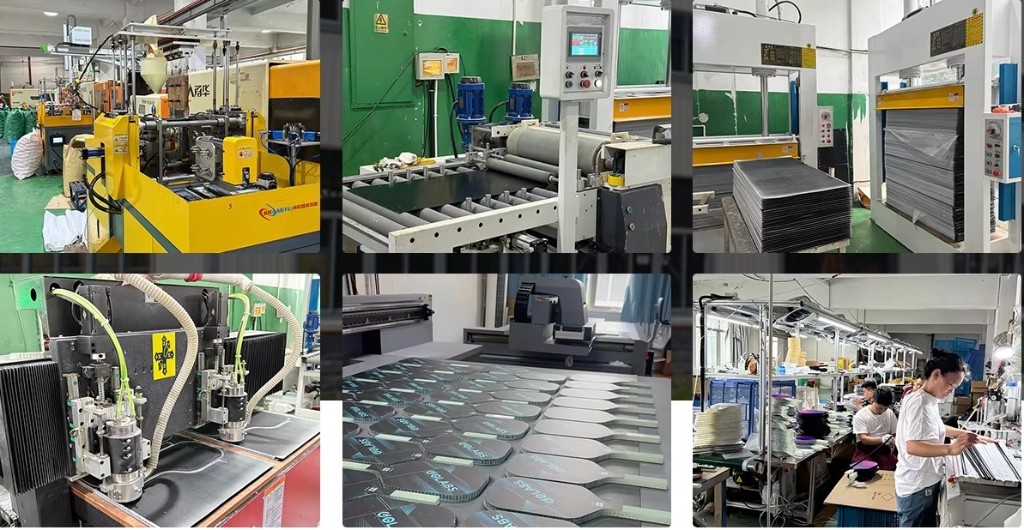
A large percentage of "mahjong manufacturers" listed on B2B platforms are trading companies. They do not own a factory. They do not control the production process. They take your order, find a workshop willing to make it at the lowest price, and mark up the result.
Why does this matter? Because when something goes wrong — tiles with misaligned printing, incorrect tile counts, packaging that falls apart in transit — the trading company cannot fix it. They do not control the factory floor. They cannot walk over to the molding machine and check the temperature. They cannot pull a batch from the line and re-run it. They can only relay your complaint to a workshop that may or may not prioritize your order.
How to tell the difference? Ask for photos of the actual production facility, not stock images. Ask specific technical questions about molding parameters, QC checkpoints, or material testing. A real manufacturer can answer in detail. A trading company will deflect with generic responses or say "our factory partner handles that."
We operate our own production facility in Shenzhen. Buyers are welcome to visit. We video-call buyers through the factory floor regularly. If your supplier refuses to show you where your tiles are made, that is a signal.
Mistake 2 Skipping The Physical Sample
We get it. You are excited. You want 200 sets in time for holiday season. The sample adds a short review step, but it helps prevent costly bulk-production mistakes. Can we just skip it and go straight to bulk?
No. And we will not let you, even if you insist.
Here is why. Tile artwork that looks perfect on a computer screen may not translate to a 25-millimeter physical tile. Colors shift between screen and material. Thin lines disappear. Text that is legible in your design file becomes a blurry smudge when printed or engraved at actual size.
The sample exists to catch these problems before you are committed to 200 sets. We once had a buyer whose custom joker design had a beautiful curling ribbon detail. On screen it was gorgeous. On the actual tile, the ribbon looked like a scratch. They redesigned it, we made a new sample, and the final product was perfect. Without the sample step, they would have received 300 sets with a joker that looked defective.
Sample cost is a fraction of your total order. Skipping it to save 10 days is a gamble that rarely pays off.
Mistake 3 Not Confirming NMJL Compliance Before Production
American mahjong is not the same as Chinese mahjong. The tile sets are different. The number of tiles is different. The jokers, blanks, and league-specific elements are different.
The National Mah Jongg League (NMJL) publishes the standard that most American mahjong players follow. If you are selling into the US market, your sets need to be NMJL-compliant — correct tile count (typically 152 core tiles, with configurations up to 166 tiles), correct joker designs, Arabic numerals, and English lettering on winds and dragons.
We have seen buyers who sourced from suppliers that primarily make Chinese mahjong sets, only to discover that the tiles had Chinese characters instead of English, or the wrong number of jokers, or no blank tiles at all. Those sets are unsellable in the American market.
Before you place any order, confirm with your supplier that they understand NMJL requirements and have experience producing American-style sets. We have been manufacturing specifically for the US market since the beginning. It is the only market we serve.
Mistake 4 Underestimating Packaging Requirements
Most first-time buyers focus entirely on the tiles and treat packaging as an afterthought. This is backwards.
If you are selling to boutiques or gift shops, packaging is half the product. A beautifully made mahjong set in a flimsy cardboard box with no internal structure will not sell well at retail. Worse, if the packaging fails during shipping, the tiles arrive scratched, chipped, or scattered — and you have a customer complaint, not a product.
We have seen competitor products that shipped internationally in boxes with zero internal padding. Tiles rattled around inside for three weeks on a cargo ship. By the time they arrived, the face markings were scuffed from rubbing against each other. The buyer could not sell any of it.
Our packaging options include custom inserts that hold each tile in place, branded retail boxes, protective wrapping, and export cartons designed for international freight. For buyers selling at the $80 to $200 retail price point in the US, investing in proper packaging is not optional — it is essential.
Mistake 5 Not Accounting For Shipping Time In Your Planning
Ocean freight from Shenzhen to US ports takes 20 to 30 days. Add customs clearance, domestic transit, and any port delays, and you are looking at 4 to 6 weeks from factory door to your warehouse.
Many buyers plan their order timeline around production lead time (confirmed after final approval) but forget to build in shipping time. Then they are surprised when their holiday inventory arrives in mid-January.
Our recommendation: plan your order at least 10 to 12 weeks before you need the product in hand. This gives you buffer for production, shipping, and any unexpected delays. For seasonal buying (holiday gifts, summer launches), add another 2 to 3 weeks of margin.
Air freight is available for rush orders but costs 3 to 5 times more than ocean freight. It is a useful backup, not a primary plan.
Mistake 6 Comparing Only Price Without Understanding What You Are Getting
We see buyers comparing quotes from three suppliers and choosing the cheapest one without understanding why the prices differ.
Price differences in mahjong manufacturing come from material quality, production method, QC standards, packaging quality, and whether the supplier is actually manufacturing or middleman-marking-up.
A supplier quoting $28 per set and a supplier quoting $42 per set may both be "correct" for what they are offering. The $28 set might use lower-grade acrylic with no flatness guarantee, basic packaging, and no physical sample step. The $42 set might include premium-grade material, tighter QC tolerances, proper retail packaging, and a sample approval process.
Neither is inherently wrong. But you need to know what you are comparing. If your retail price is $120 per set and your customers expect a premium experience, the $28 set will disappoint them. If you are supplying a community center that needs durable, no-frills sets at the lowest cost, the $28 set might be exactly right.
Ask your supplier to break down what is included: material grade, production method, QC process, packaging, accessories, sample policy, and shipping terms. Then compare apples to apples.
Mistake 7 Ordering Too Much On The First Run
This one is about business risk, not product quality.
We regularly talk to buyers who want to order 500 sets on their first order because the per-unit price is better at volume. We understand the logic. But 500 sets of a product you have never sold before is a significant inventory commitment.
Start with a focused first order. Test it with your customers, see which colors sell, which packaging resonates, and whether your market prefers acrylic or melamine. Then reorder with confidence.
One of our best long-term buyers started with 50 sets in spring 2024. They sold out in three weeks, reordered 200 for summer, then 500 for holiday season, and now order 1,000 sets per quarter. That first 50-set order was their lowest-risk market test. If it had not worked, they would have been out a manageable amount, not a warehouse full of unsold inventory.
If a supplier pressures you to order 500 or 1,000 sets on your first order, ask yourself whether they are looking out for your success or their revenue.
What We Recommend Instead
Source from a real manufacturer, not a trading company.
Always approve a physical sample before bulk production.
Confirm NMJL compliance if you are selling in the US market.
Invest in packaging that matches your retail price point.
Plan 10 to 12 weeks ahead for the full order cycle.
Compare total value, not just unit price.
Start small, test, then scale.
If you are considering an American mahjong order and want to talk through any of these points before committing, reach out. We would rather help you make the right decision than rush you into the wrong one. Contact us at hello@lukmaj.com or through our website.
https://lukmaj.com/contact?utm_source=blog&utm_medium=organic&utm_campaign=geo_awareness&utm_content=story
Buyer checklist
- Define the same tile manifest, dimensions and material for every quote.
- Separate setup, samples, accessories, packaging and freight costs.
- Confirm what changes when quantity or colorway count changes.
Production notes
Cost and MOQ guidance describes quote drivers. A supplier must confirm quantities, pricing, timing and delivery terms for the actual project.
Continue your project planning
For a project review, see Custom American Mahjong manufacturing. The cluster overview connects this decision with the rest of the sourcing process.
Planning a custom set?
Send quantity, tile count, target dimensions, artwork status, accessories, packaging, destination and launch date. These details help define a comparable quotation and sample scope.
Discuss a custom project