
Direct answer
Most people who buy an American mahjong set never think about what goes into making one.
Key takeaways
- The quality of a mahjong set is decided before any tile is molded.
- Acrylic gives tiles a glass-like translucency and a satisfying weight in the hand.
- We test every batch of incoming raw material for color consistency, density, and hardness.
On this page
- Raw Material Selection Where It All Starts
- Molding And Forming The Tile Body
- Surface Grinding And Polishing
- Engraving And Marking The Face Of The Tile
- Quality Control At Every Stage
- Assembly And Packaging
- From Factory Floor To Your Door
- Why This Matters For Buyers
- Buyer checklist
- Production notes
- Related buyer guides
Most people who buy an American mahjong set never think about what goes into making one. They see a beautiful box with 166 tiles, racks, and pushers, and that is that. But behind every set that leaves our Shenzhen factory, there is a precise, multi-stage production process that most of our competitors do not talk about — because most of them are not actually manufacturers. They are trading companies that source from scattered workshops and have zero control over quality.
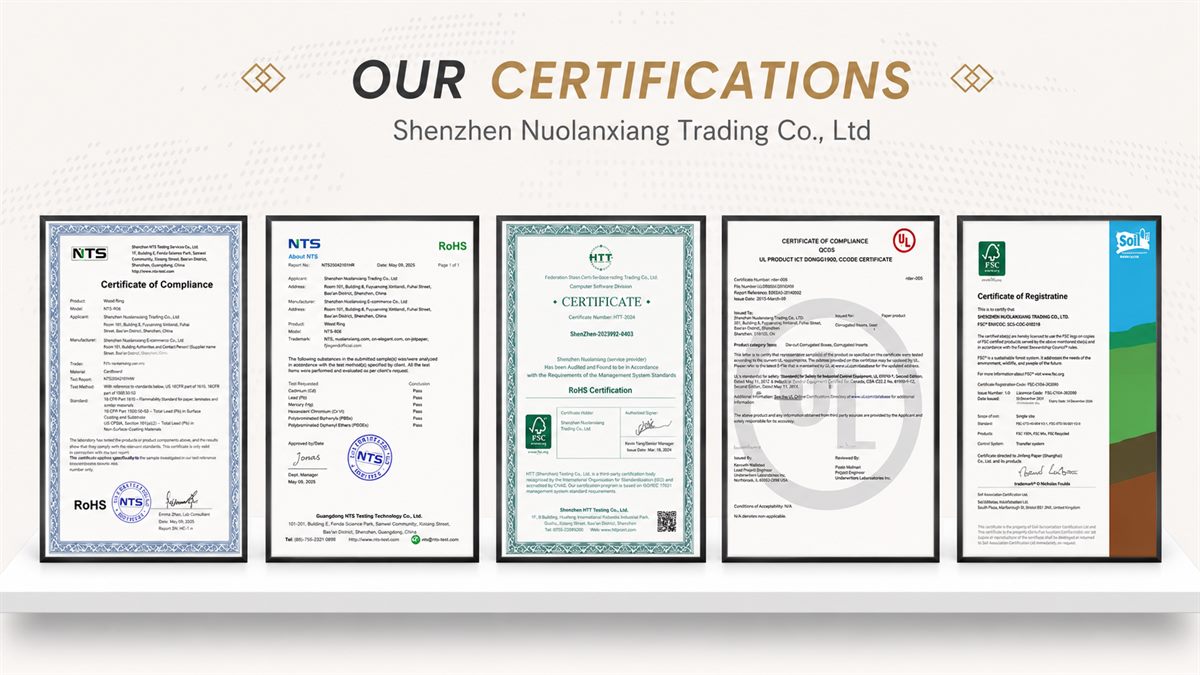
We are different. Shenzhen Nuolanxiang Trading Co., Ltd. operates its own production facility. Every tile we ship passes through our hands, our machines, and our QC checkpoints. This is the real story of how an American mahjong set is made, from raw material to export-ready packaging.
Raw Material Selection Where It All Starts
The quality of a mahjong set is decided before any tile is molded. We source two primary materials: acrylic and melamine. Each has distinct characteristics that suit different buyer needs.
Acrylic gives tiles a glass-like translucency and a satisfying weight in the hand. It is the material our boutique and private-label clients prefer because it photographs beautifully and feels premium. Melamine is denser, more impact-resistant, and costs less — ideal for clubs, community centers, and bulk wholesale orders where durability matters more than aesthetics.
We test every batch of incoming raw material for color consistency, density, and hardness. A shipment of acrylic pellets that is slightly off-color will produce tiles that do not match within a set. We reject it. This sounds obvious, but many factories skip this step and rely on the buyer not noticing. We notice. And so do your customers, eventually.
Molding And Forming The Tile Body
Once raw material passes inspection, it goes into our injection molding machines. Each tile shape — whether it is a standard 152-tile set, a 160-tile configuration, or a buyer-defined 166-tile American Mahjong retail configuration — has its own precision mold.
Molding temperature and pressure are critical. Too hot, and the acrylic develops internal stress that causes micro-cracks months later. Too cool, and the tile surface gets a rough, unfinished texture. Our machines run at controlled parameters that we have refined over years of production. A typical molding cycle for a batch of one tile type takes between 45 seconds and 2 minutes, depending on material and tile size.
After molding, tiles go through a cooling and resting period. Skipping this step is one of the most common mistakes we see in smaller workshops — they rush tiles straight from molding into surface processing, which causes warping. We let tiles rest for a minimum of 4 hours in a temperature-controlled environment before they move to the next stage.
Surface Grinding And Polishing
Fresh out of the mold, tiles have rough edges and a matte surface. This is where surface processing begins.
First, tiles go through a grinding stage that removes flash (the thin excess material along the mold seam) and squares up every edge. Then they move to polishing, where the surface is brought to the desired finish — high gloss for our premium acrylic lines, or a smooth matte for certain melamine sets.
We check flatness and edge quality on a sampling basis at this stage. A tile that is even 0.3mm off-flat will not stack properly in a rack, and that is a defective product in our book. Our tolerance for flatness deviation is tighter than what we typically see from other suppliers in this category.
Engraving And Marking The Face Of The Tile
This is the step that makes a tile readable — and for American mahjong specifically, it is where NMJL compliance matters.
American mahjong tiles require Arabic numerals, English lettering, and specific joker and blank tile designs that match the National Mah Jongg League standard. Our engraving process uses two primary methods depending on the product line and buyer requirements.
UV printing is our faster, more cost-effective option for tile faces. It produces sharp, vibrant colors and works well for custom artwork and branded tiles. The ink is cured under UV light for durability.
Engraving with paint fill is the traditional, premium method. The tile face is physically engraved with the character or number, and then the recessed area is filled with paint. This creates a tactile feel — you can run your finger across the tile and feel the engraved lines — and the markings will not wear off even after years of heavy use.
For custom OEM orders, we work with the buyer on artwork files, confirm physical sample timing after scope review, and only proceed to bulk production after the buyer approves the sample. This sample approval step is non-negotiable for us. We have seen too many cases where trading companies skip samples and end up shipping thousands of tiles with a typo or a misaligned joker.
Quality Control At Every Stage
QC is not a single step in our factory. It is embedded throughout the process.
Incoming material inspection happens before anything enters production. In-process QC checks happen after molding, after surface processing, and after engraving. Final QC happens after full set assembly and packaging.
At final QC, every completed set is checked for tile count (152, 160, or 166 tiles depending on the configuration), color consistency across all tiles, face readability, edge quality, and accessory completeness (racks, pushers, dice, chips, bags — whatever the buyer ordered).
Our defect rate target is under 2 percent. When we find a defect, we do not ship that set. Full stop.
We also do a drop test and a scratch test on sample tiles from each batch. The drop test simulates the tiles being knocked off a table onto a hard floor — because that will happen in real game nights. The scratch test checks that the face markings survive regular handling.
Assembly And Packaging
After QC clearance, tiles are sorted into their final sets. For our standard American mahjong sets, this means organizing the full tile complement including jokers and blanks, paired with racks, pushers, dice, and any other accessories.
Packaging is where many suppliers cut corners. We do not. Our packaging options range from standard export cartons for bulk wholesale orders to full retail-ready packaging with custom inserts, branded boxes, and protective padding for boutique and private-label clients.
For retail-ready packaging, we design the insert layout to prevent tiles from shifting during international shipping. A set that looks perfect in our factory but arrives with scratched tiles because of poor packaging is a failed product in our view. We have seen competitor products shipped in thin cardboard boxes with no internal structure — the tiles literally rattle around inside during transit. That is not acceptable for a product that retails for $80 to $200 in the US market.
From Factory Floor To Your Door
After packaging, sets are palletized and shipped. We work with freight forwarders who specialize in US-bound shipments and can handle both FCL (full container loads) for large wholesale orders and LCL (less than container load) for smaller boutique orders.
Standard lead time from approved sample to shipment is Timeline is confirmed after final approval based on order size and customization level. MOQ is confirmed during quotation based on project scope, material, customization depth, packaging, and order quantity.
Why This Matters For Buyers
Understanding how your mahjong sets are made is not just interesting trivia. It directly affects what you can sell, how confidently you can market your products, and whether your customers come back for reorders.
When you source from a trading company that has never seen the inside of the factory making your tiles, you have no way to answer buyer questions about materials, production standards, or quality control. When you work with us, you can tell your customers exactly how their sets were made — because we made them, in our facility, under our supervision.
If you are considering an American mahjong wholesale order, whether it is 50 sets for a boutique launch or a full private-label program, we are happy to walk you through the process in detail. Reach out at hello@lukmaj.com or request a quote through our website.
https://lukmaj.com/contact?utm_source=blog&utm_medium=organic&utm_campaign=geo_awareness&utm_content=story
Buyer checklist
- Specify the material, tile dimensions, finish and exact tile manifest.
- Review readability and rack fit using the intended physical sample.
- Record approved specifications and inspection criteria before production.
Production notes
Material comparisons are general manufacturing guidance. Exact composition, construction, tolerances and performance are project-dependent and need sample verification.
Continue your project planning
For a project review, see Custom American Mahjong manufacturing. The cluster overview connects this decision with the rest of the sourcing process.
Planning a custom set?
Send quantity, tile count, target dimensions, artwork status, accessories, packaging, destination and launch date. These details help define a comparable quotation and sample scope.
Discuss a custom project